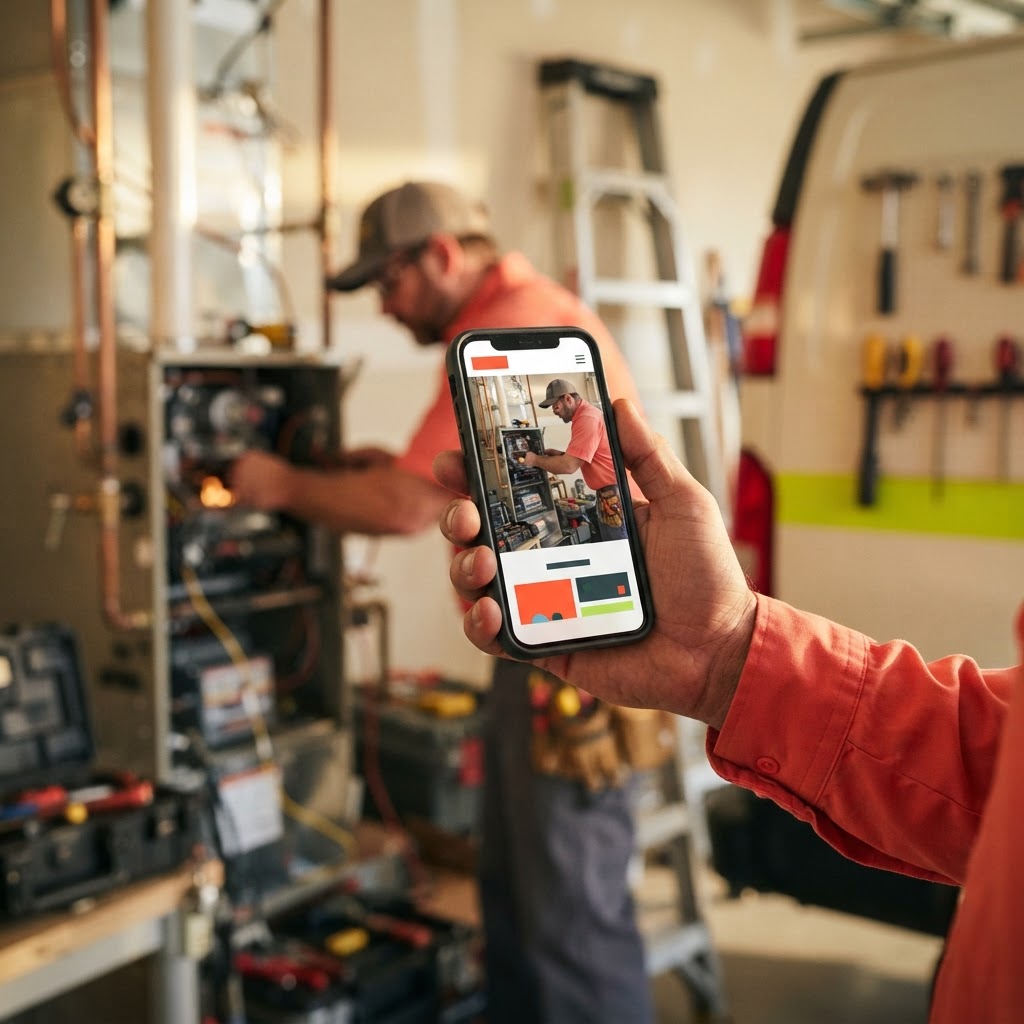
Imagine a homeowner sitting on their couch at 8:00 PM. Their water heater just started leaking, or their AC unit is making a sound like a dying lawnmower. They pull out their phone, type 'plumber near me' or 'HVAC repair,' and click on the first few results. They land on your website. Within three seconds, they make a subconscious decision: Is this company real, or are they just another faceless lead-gen site?
If they see a polished, high-definition photo of a model in a pristine uniform shaking hands with a smiling customer in a kitchen that looks like it belongs in a magazine, they don't see a local expert. They see a generic placeholder. They see a company that didn't have the time or the pride to show their own work. In the world of local trades, that split-second impression is often the difference between a booked job and a bounce to your competitor.
The truth is, homeowners are smarter than we give them credit for. They can spot a stock photo from a mile away. When you use those generic images, you aren't just filling space; you are signaling that you have nothing of your own to show. Let’s talk about why your camera roll is actually your most powerful marketing asset.
Why Stock Photos Are Quietly Costing You Leads
When a customer hires a contractor, they are inviting a stranger into their home. That is a high-stakes decision. They aren't looking for 'corporate synergy' or 'professionalism' in the abstract; they are looking for proof that you are who you say you are. Stock photos break that trust because they feel fake. When a homeowner sees a photo that looks like it was pulled from a global database, their brain immediately flags it as a red flag.
Research consistently shows that authentic imagery is a primary driver of trust. According to industry data, nearly 78% of homeowners prioritize seeing actual project photos when evaluating a contractor. They want to see your truck, your uniforms, your messy (but real) job sites, and the actual results of your labor. When you replace those with stock images, you are essentially hiding your business behind a mask.
The Trust Gap: Real Photos vs. Stock Imagery
Think of your website as a digital handshake. If you walked into a customer's home wearing a mask, they would be suspicious. Using stock photos is the digital equivalent of that mask. Real photos provide the 'fingerprints' of your business—the specific way you lay out your tools, the specific brand of equipment you install, and the specific faces of the people who will actually show up at their door.
Here is how these two approaches stack up when a customer is deciding who to call:
| Feature | Stock Photos | Real Job Photos |
|---|---|---|
| Trust Factor | Low (Feels generic/fake) | High (Feels authentic/proven) |
| Customer Perception | 'They have nothing to show' | 'They are experts in their field' |
| Conversion Impact | Often causes site abandonment | Increases calls and form fills |
| Brand Identity | Looks like every other site | Unique to your local reputation |
The data is clear: homeowners are looking for evidence. They want to see the 'before' of a disaster and the 'after' of a job well done. That transformation is the story of your value. You cannot tell that story with a stock photo of a generic wrench.

Impact of Authentic Imagery on Conversion Rates
Note: These figures are illustrative of industry trends regarding consumer trust and conversion behavior in the home services sector.
How to Build a Library of Trust-Winning Photos
You don't need a professional film crew to make this happen. In fact, overly polished photos can sometimes feel just as fake as stock images. What you need is consistency. Start by capturing the 'signs of failure'—the leaky pipe, the rusted furnace, the damaged roof. Then, capture the process. Show your team working, show the safety gear, and show the final, clean result.
Pro Tip: Don't wait for the 'perfect' shot. A clear, well-lit photo taken with a modern smartphone is infinitely better than a blurry, low-quality image or a generic stock photo. Focus on the details that matter to the homeowner: cleanliness, organization, and the finished product.
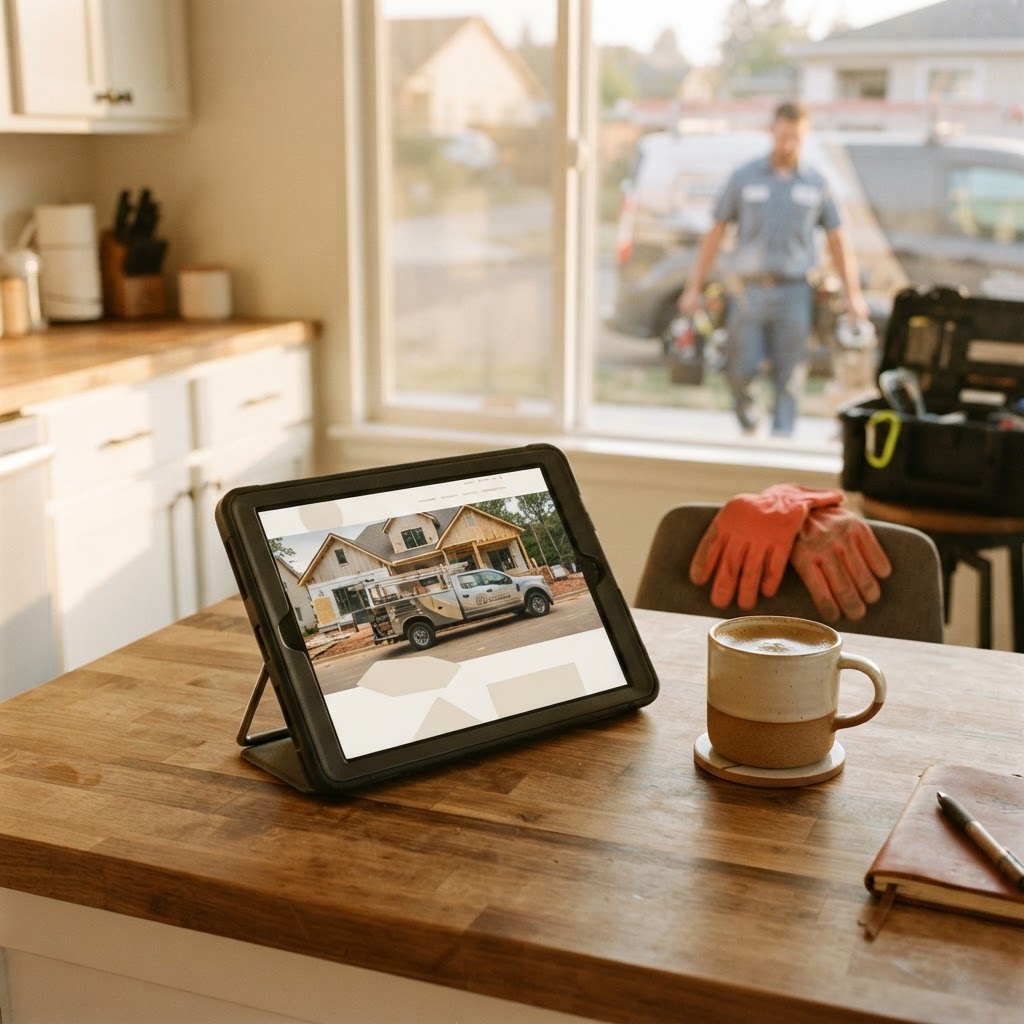
If you are a plumbing company we'll call Lopez Plumbing, your website should feature photos of your actual team members in their branded shirts, standing in front of your actual vans. When a customer sees that, they know exactly who is coming to their house. That familiarity reduces anxiety and makes the 'Request a Quote' button much easier to click.
Key Takeaways
| Point | Details |
|---|---|
| Authenticity | Real photos prove you are a legitimate, local business. |
| Trust | Homeowners trust faces and real work over stock models. |
| Conversion | Authentic imagery leads to more calls and booked jobs. |
| Simplicity | Use your smartphone to document the process and results. |
Conclusion: Your Website is Your Digital Storefront
Your website is not just a brochure; it is the first interaction a customer has with your brand. If it looks like a generic template filled with stock photos, you are telling your customers that your business is generic, too. By swapping out those fake images for real, gritty, honest photos of your work, you build an immediate connection that your competitors are likely missing.
At Video-Joy, we specialize in building fast, mobile-first websites for local businesses that actually convert visitors into customers. We believe in showing off your hard work, not hiding it behind stock imagery. If you are ready to see what your business could look like with a site that actually works for you, get a free preview of your business's new website and let us show you the difference.