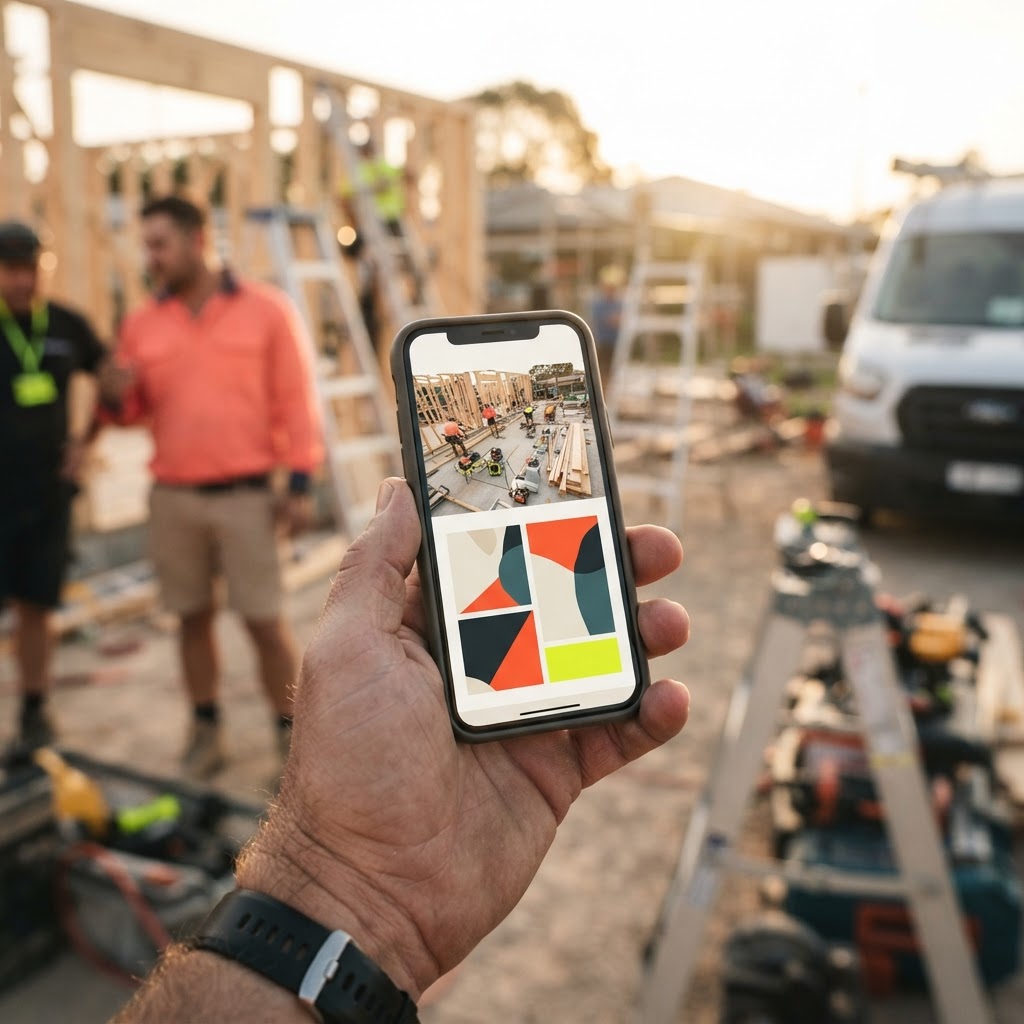
The Silent Trust Killer on Your Homepage
Imagine a homeowner sitting on their couch at 8:00 PM, scrolling through their phone after a pipe burst under their kitchen sink. They search for a local plumber, click on your website, and are greeted by a high-definition photo of a smiling model in a pristine, white hard hat holding a wrench that looks like it has never touched a bolt. They click to your 'About Us' page and see another stock photo of a group of people in matching polo shirts laughing at a laptop. In that split second, the homeowner doesn't think, 'Wow, this is a professional company.' They think, 'This looks fake.' And just like that, they hit the back button to find the next contractor on the list.
For local service businesses, your website is not a digital brochure; it is your primary proof of life. When a customer is considering hiring you for a project that might cost thousands of dollars, they are looking for one thing above all else: evidence that you are a real, competent, and trustworthy human being. Stock photos, while convenient, are the antithesis of that evidence. They signal that you have nothing of your own to show, which forces the customer to wonder if you have anything of value to offer at all.
Why Stock Photos Are Costing You Conversions
The problem with stock photography isn't just that it looks 'too perfect'—it's that it is universally recognizable. Homeowners have seen the same 'friendly technician' image on dozens of other websites. When they see it on yours, it creates an immediate, subconscious disconnect. It tells the visitor that you are hiding behind a polished facade rather than showing them the reality of your work.
Research consistently shows that authentic imagery is a massive driver of trust. In fact, some studies suggest that websites using authentic team and project photos see up to a 65% higher trust score compared to those relying on generic stock photography. When you use real photos, you aren't just filling space; you are providing the visual proof that you are the expert you claim to be.
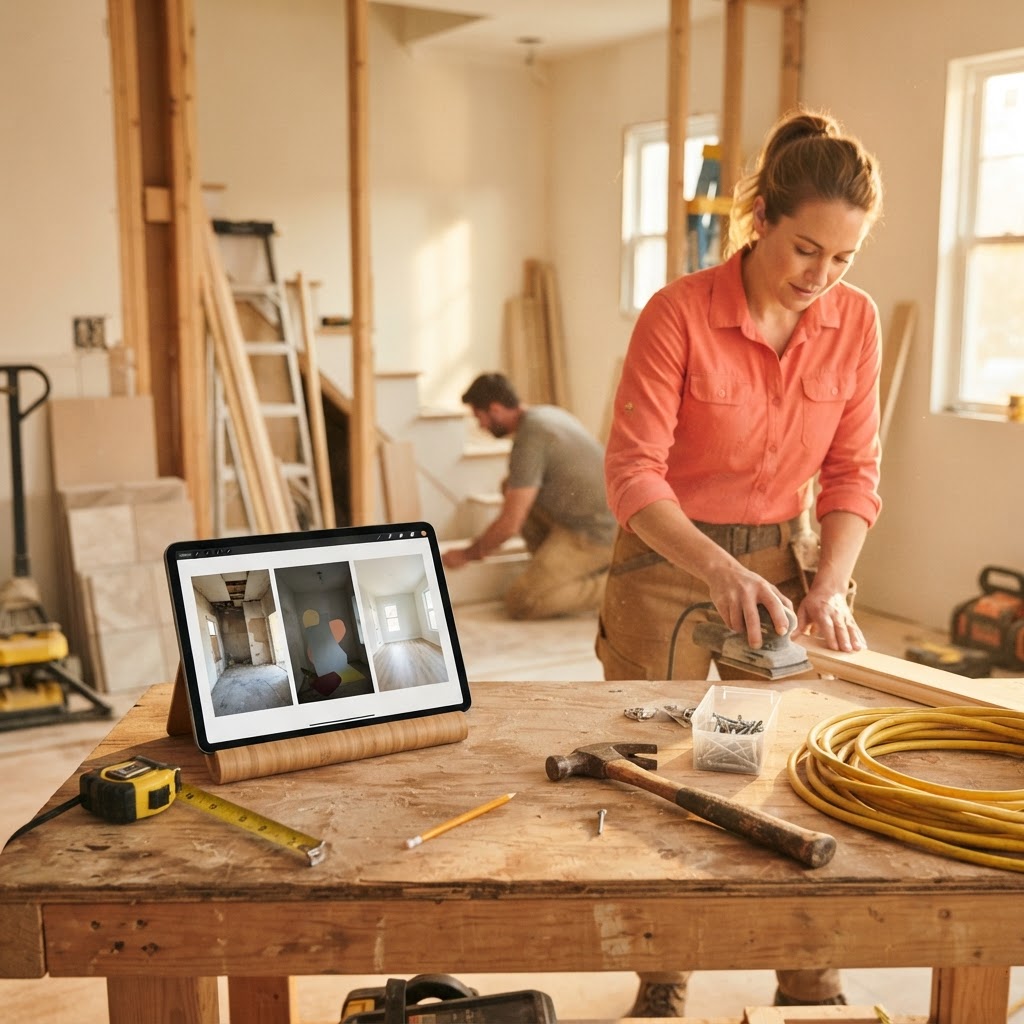
Every image on your site should answer one of two questions: 'Is this company actually good at what they do?' or 'Can I trust these people with my home and my money?' If a photo doesn't answer one of those, it is likely doing more harm than good.
The Trust-Building Hierarchy
Not all photos are created equal. To build a site that actually converts visitors into booked jobs, you need to prioritize the right kind of visual content. Here is how different types of imagery impact the homeowner's decision-making process.
| Image Type | Trust Impact | Why It Works |
|---|---|---|
| Before-and-After | High | Proves your capability and attention to detail. |
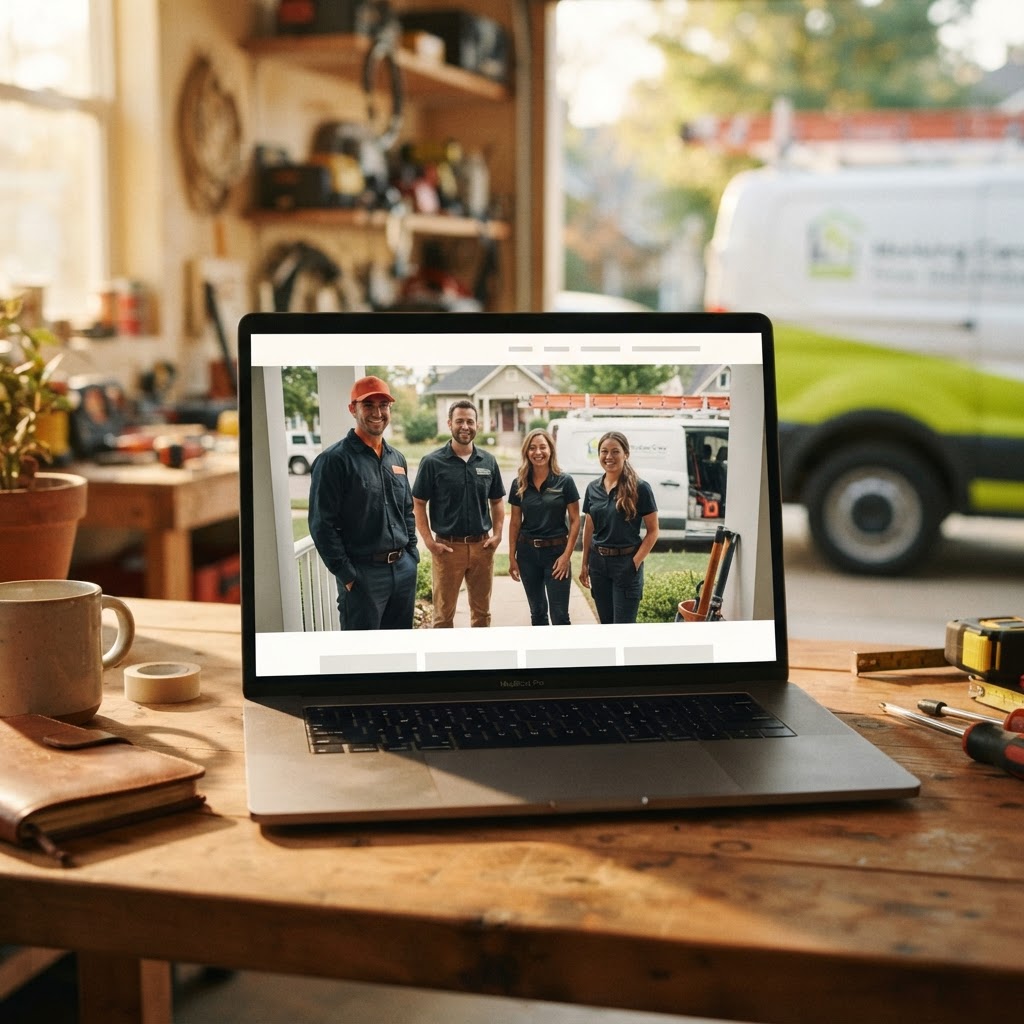
| Real Crew/Owner | High | Humanizes the brand and addresses safety concerns. |
| Job Site Action | Medium | Shows you are currently active and busy. |
| Generic Stock | Negative | Signals inauthenticity and lack of experience. |
Impact of Authentic Imagery on Conversion Rates
Pro Tip: You don't need a professional photographer to build a library of high-trust images. Your smartphone is more than capable. The goal is 'real,' not 'perfect.' A slightly dusty photo of a real job site is infinitely more valuable than a polished, fake studio shot.
How to Build a Content Library Without the Hassle
The biggest barrier to using real photos is the perceived effort. You are busy running a crew, not managing a media production house. However, you can build a massive library of authentic content by simply changing your daily habits. Make it a standard operating procedure for your team to take three 'before' photos and three 'after' photos on every single job. If you complete 200 jobs a year, you will have 400 pieces of authentic marketing content by December.
Organize these photos by project type—not by date. When a homeowner is looking for a roof repair, they don't care when you did the work; they care that you have done work that looks like their house. By categorizing your portfolio, you make it easy for the customer to find the specific proof they need to feel comfortable hiring you.
Key Takeaways
| Point | Details |
|---|---|
| Authenticity | Real photos build trust; stock photos break it. |
| The Goal | Your website must prove your work, not just list it. |
| The Habit | Use your phone to capture before-and-after shots on every job. |
| Organization | Group photos by project type to help customers find relevant proof. |
Pro Tip: Always get permission from the homeowner before posting photos of their property. A simple text message asking, 'Do you mind if we share a few photos of the finished project on our website?' is usually all it takes.
Conclusion
Your website is either your best salesperson or your biggest liability. If it is filled with generic stock photos, it is likely the latter, quietly pushing potential customers toward your competitors who are brave enough to show their real work. You don't need a massive marketing budget to fix this; you just need to start documenting the work you are already doing. If you are ready to stop hiding behind stock images and start showing customers exactly why they should hire you, get a free preview of your business's new website from Video-Joy. We build fast, mobile-first sites designed to turn local searchers into booked jobs, and we show you exactly what that looks like before you ever pay a dime.