The First 3 Seconds: Hooks That Make Church Videos Watchable

Imagine you are scrolling through your social media feed. You pass a dozen posts in seconds—a friend’s vacation photo, a news headline, a funny cat video—and then, you stop. Something caught your eye. Maybe it was a bold question, a surprising visual, or a person speaking directly to your current struggle. That split-second decision to stop scrolling is the most important moment in your digital ministry.
For many churches, the challenge isn't the quality of the message; it’s the packaging. You have life-changing truth to share, but if your video doesn't grab a stranger’s attention in the first three seconds, they will never hear it. In a world of endless content, your church’s video needs a hook that acts like a digital handshake, inviting the viewer to stay just a little bit longer.
Why the First Three Seconds Matter Most
Data consistently shows that viewer retention drops off a cliff immediately after a video starts. If your opening is a slow pan of the sanctuary or a long, silent shot of a pastor sitting in a chair, you are likely losing a significant portion of your audience before the first word is spoken. A strong hook isn't about being flashy or gimmicky; it’s about respecting the viewer's time and signaling that what follows is worth their attention.
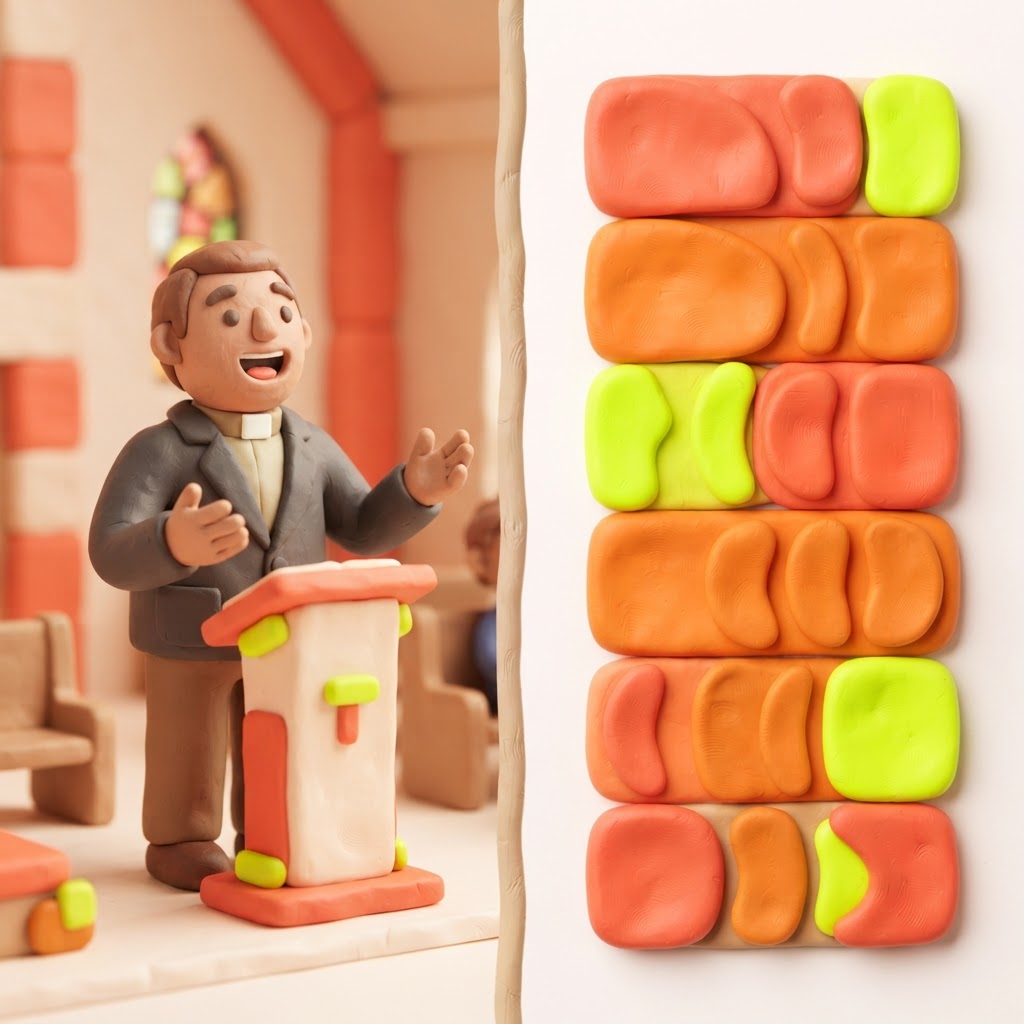
Estimated Viewer Retention by Opening Style
Note: These figures are illustrative benchmarks based on common social media engagement patterns.
Types of Hooks That Actually Work
You don't need a professional studio to create a compelling opening. You just need to understand what makes a human brain pause. Here are four reliable ways to start your videos:
- The Question Hook: Start with a question that addresses a real-life pain point. Example: "Ever feel like you're running on empty by Wednesday?"
- The Inversion Hook: Challenge a common assumption. Example: "Most people think prayer is about changing God's mind, but it's actually about changing yours."
- The Visual Jolt: Use a quick zoom, a change in camera angle, or a piece of text on the screen to break the visual monotony.
- The Story Hook: Start in the middle of a narrative. Example: "I was standing in the grocery store when I realized I had completely forgotten why I was there."
Pro Tip: If you are filming a sermon clip, don't start with the pastor saying, "Good morning, everyone, let's open our Bibles." Cut straight to the most provocative or encouraging sentence of the message.
Making Your Content Accessible
Remember that many people watch videos on their phones while in public, often with the sound off. If your hook relies entirely on audio, you are missing out on a huge audience. Use on-screen captions to display your hook clearly. This ensures that even if someone is scrolling in a waiting room or on a bus, they can still engage with your message.
At Video-Joy, we often see churches struggle to find the time to edit these clips consistently. We help by taking the heavy lifting off your plate—we show up, film, edit, and post so church staff don't have to. see how Video-Joy grows churches online.

Key Takeaways
| Point | Details |
|---|---|
| The 3-Second Rule | You have roughly 3 seconds to convince a stranger to stop scrolling. |
| Avoid Slow Starts | Skip the long intros, music fades, or "good morning" greetings. |
| Use Visuals | Use text overlays and movement to keep the eye engaged. |
| Silent-Friendly | Always include captions so the video works without sound. |
| Retention Hunting | Look at your past video data to see where people stayed longest, then use that as a future hook. |
Pro Tip: Don't overthink the "perfect" hook. Authenticity almost always outperforms high-end production. A sincere, well-lit video of a real person speaking from the heart is more effective than a polished, impersonal advertisement.
Conclusion
The goal of your social media presence isn't just to get views; it's to start conversations that lead to real-world connection. By mastering the first three seconds, you aren't just playing the algorithm game—you are opening a door for someone in your community to find hope, community, and a place to belong. Start small, test different hooks, and keep showing up for your neighbors.