Mobile-First for the Trades: Your Customers Search From the Couch
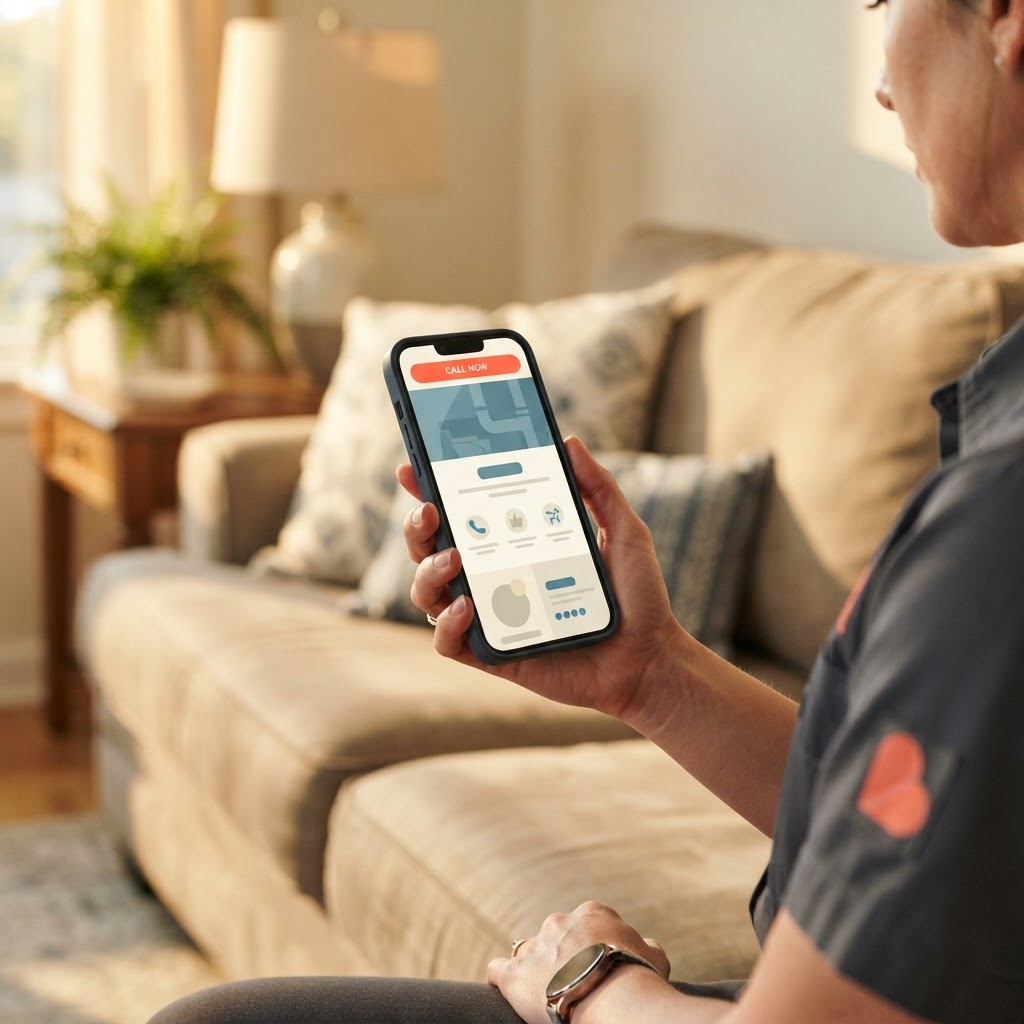
Picture this: It is 8:00 PM on a Tuesday. A homeowner is sitting on their couch, scrolling through their phone, when they realize their water heater is leaking or their HVAC unit is making a sound that definitely shouldn't be there. They don't walk to the home office to fire up a desktop computer. They open Google, type in "plumber near me," and click the first few results that look professional.
If your website takes five seconds to load, requires them to pinch and zoom to read your phone number, or looks like it was built in 2005, they are gone. They aren't frustrated; they are just moving on to the next link. In the world of local trades, your website is your digital storefront, and for the vast majority of your customers, that storefront is currently being viewed on a screen that fits in their pocket.
Why Your Desktop View Is Becoming Irrelevant
We often hear from business owners who spend hours perfecting how their site looks on a 27-inch monitor. While it is nice to have a site that looks good on a big screen, the data tells a different story. As of 2025, over 64% of all web traffic comes from mobile devices. For local service businesses, that number is often even higher because the "near me" search intent is almost exclusively mobile-driven.
When a customer is searching for an emergency repair or a quick quote, they have zero patience for a site that isn't optimized for their device. If your site isn't mobile-first, you aren't just losing a few visitors—you are effectively closing your doors to the majority of your potential market. A mobile-first approach means your site was built to be fast, readable, and actionable on a smartphone from day one, rather than just "shrinking down" a desktop design.
The Cost of a Slow or Clunky Mobile Experience
Every second counts when a customer is in "search and rescue" mode. Research shows that over 50% of mobile visitors will abandon a site if it takes longer than three seconds to load. Think about that: if your site is sluggish, you are losing half your potential leads before they even see your logo.
The Cost of Mobile Friction (Illustrative Benchmarks)
At Video-Joy, we see this constantly with local contractors. A plumbing company we'll call Lopez Plumbing had a beautiful, image-heavy site that looked great on a laptop but was a nightmare on mobile. By simplifying their layout and prioritizing a "click-to-call" button, they saw their lead volume jump significantly because they finally made it easy for the customer to say "yes."
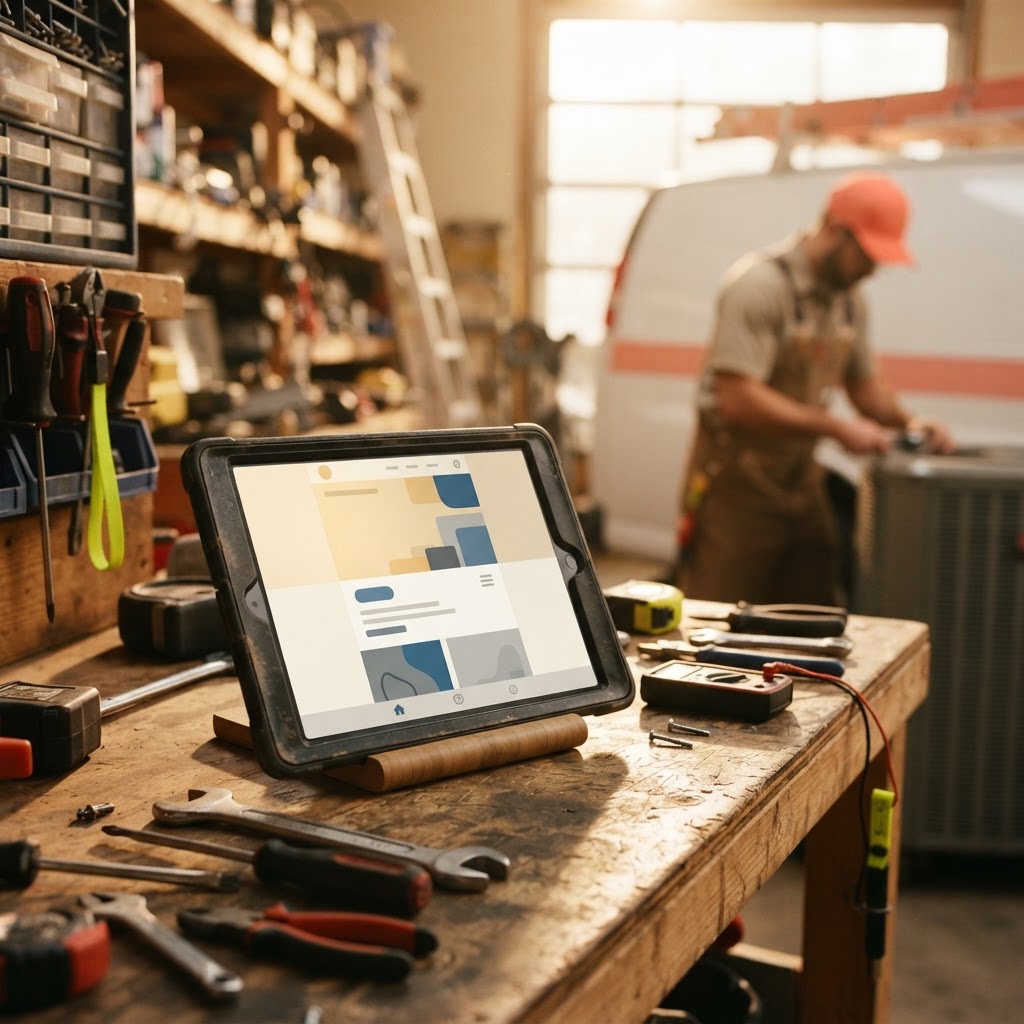
Essential Features for the Mobile-First Tradesman
If you want to capture the customer who is searching from their couch, your website needs to be built for speed and action. Here is a quick checklist of what your mobile site must have to convert visitors into booked jobs.
| Feature | Why It Matters |
|---|---|
| Click-to-Call Buttons | Customers want to talk now, not fill out a form. |
| Fast Load Times | Every 100ms of delay costs you conversion percentage. |
| Clear Service Areas | Helps Google rank you for local "near me" searches. |
| Mobile-Optimized Forms | Keep it to 2-3 fields max (Name, Phone, Service). |
| Trust Badges | Show your license and insurance clearly on mobile. |
Pro Tip: Don't hide your phone number in a "Contact Us" sub-menu. Place a prominent, sticky "Call Now" button at the top or bottom of the screen that stays visible as the user scrolls.

Why Google Prioritizes Mobile Usability
Google isn't just trying to be helpful; they are trying to provide the best experience for their users. If Google sends a searcher to your site and that user immediately hits the "back" button because the site is broken on mobile, Google takes note. Over time, this tells the search engine that your site isn't a good result, and your rankings will drop.
By investing in a mobile-first design, you are essentially telling Google that you are a modern, reliable business. This helps you climb into the "Local 3-Pack"—that coveted map section at the top of search results. When you rank there, you aren't just another option; you are the authority in your area.
Pro Tip: Use high-quality, compressed images. Large, unoptimized photos are the #1 reason service business websites load slowly on mobile networks.
Key Takeaways
| Point | Details |
|---|---|
| Mobile Dominance | Over 60% of local searches happen on phones. |
| The 3-Second Rule | If your site doesn't load fast, you lose the lead. |
| Action-Oriented | Prioritize click-to-call over long contact forms. |
| Local SEO | Mobile usability is a major factor in Google rankings. |
Conclusion: Stop Losing Leads to Your Competitors
Your customers are already looking for you, but they are doing it on their own terms—usually while relaxing at home or on the go. If your website isn't ready to meet them there, you are essentially handing your hard-earned leads to the competitor who made the investment in a mobile-friendly experience. It doesn't have to be complicated or expensive to fix, but it does have to be done right.
At Video-Joy, we specialize in building fast, mobile-first websites specifically for local service businesses, and we make it easy to see the difference before you commit. You can get a free preview of your business's new website today and see exactly how your brand should look on your customers' phones.